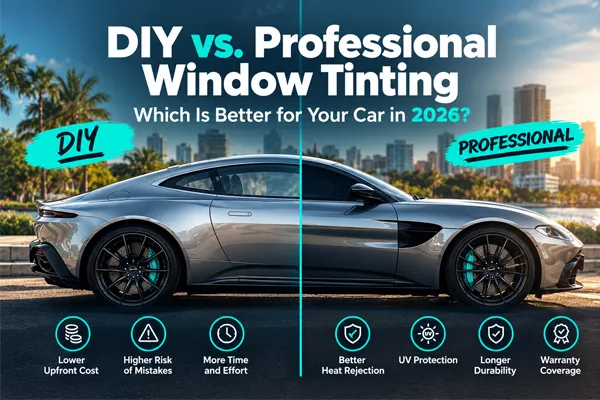
DIY vs. Professional Window Tinting: Which Is Better for Your Car in 2026?
DIY vs. Professional Window Tinting: Which Is Better for Your Car in 2026?
Thinking about tinting your car windows? You have two main options: install the film yourself or hire a professional window tinting shop.
DIY window tint kits can look like a good way to save money. However, getting a smooth, clean finish takes the right tools, patience, and experience. Mistakes can lead to bubbles, peeling, poor visibility, and the added cost of replacing the film.
Professional window tinting offers another advantage. You can choose from quality films designed to reduce heat, block harmful UV rays, and improve driving comfort without sacrificing the appearance of your vehicle.
So, which option makes the most sense in 2026?
Let's compare DIY and professional window tinting so you can make the right choice for your car and your budget.
Key Takeaways
DIY tinting costs less upfront, but installation mistakes can lead to extra expenses.
Professional installation delivers a cleaner finish with fewer bubbles, creases, and alignment issues.
Ceramic window tint can reduce heat and block more than 99% of harmful UV rays, depending on the film selected.
Professional warranties offer added peace of mind when coverage terms include qualifying material or installation issues.
Florida window tint laws matter. The legal limits depend on the window, vehicle type, and film's measured light transmission.
The best choice depends on your budget, goals, and experience, but professional installation is worth considering if you want reliable, long-term results.
Understanding DIY and Professional Window Tinting
Before choosing a tinting method, it helps to understand what each option involves.
DIY window tinting means purchasing window film and installing it yourself. You handle the glass preparation, film cutting, application, and finishing.
Professional window tinting means having trained technicians install the film using specialized tools, proven techniques, and films suited to your needs.
Both options can change the appearance of your vehicle. The bigger differences are installation quality, convenience, durability, and overall value.
What Is DIY Window Tinting?
DIY window tinting involves applying aftermarket film to your vehicle's windows without professional assistance.
Most kits include window film and basic installation instructions. Depending on the kit, you may also need a squeegee, spray bottle, utility knife, heat gun, and other supplies.
The main attraction is the lower upfront cost. You purchase the materials and provide the labor yourself.
However, automotive windows have curves, tight corners, and edges that can make installation difficult. Even a small amount of dust or a poorly placed cut can affect the final result.
DIY tinting can be a rewarding project for someone with the right skills. For beginners, it often takes more time and practice than expected.
What Is Professional Window Tinting?
Professional window tinting is installed by technicians who understand how different films behave and how to apply them to automotive glass.
A quality installation involves careful cleaning, precise film preparation, controlled application, and detailed finishing around the edges.
Professional shops can also help you choose the right film based on your priorities, whether that means reducing cabin heat, improving privacy, minimizing glare, or protecting your interior from UV exposure.
At Ultimate Shade Tint in Ocala, Florida, we use precision machine-cut patterns and quality LLumar window films to help deliver a clean, consistent finish.
Professional installation is especially helpful when you want a result that looks great and performs as expected over time.
Comparing the Upfront Costs
DIY tinting usually costs less at the beginning. Professional installation costs more because you are paying for the film, equipment, labor, and experience.
However, the initial price does not tell the whole story.
If you damage a film kit, cut the material incorrectly, or need to remove and replace a failed installation, your savings can disappear quickly.
When comparing quotes, consider:
The cost of the film and installation supplies.
Whether the film is designed for automotive use.
The time required to complete the project.
The cost of removing or replacing damaged film.
Whether the installation includes a warranty.
The expected performance of the film in Florida's heat.
A cheaper option is not always the better value. The goal is to get the performance and appearance you want without paying twice for the same job.
The Benefits of DIY Window Tinting
DIY window tinting has some advantages, especially for people who enjoy working on their vehicles and have experience with detailed projects.
1. Lower Initial Cost
The biggest advantage of DIY tinting is the potential to save money on labor.
If you already own the necessary tools and know how to apply automotive film, you may be able to complete the job for less than a professional installation.
However, beginners should budget for extra materials in case something goes wrong.
2. Hands-On Experience
Installing window tint yourself can teach you about film handling, glass preparation, and application techniques.
If you enjoy automotive projects, learning these skills can be satisfying.
Just remember that automotive window tinting takes practice. Your first attempt may not produce the same results as an experienced installer.
3. Control Over Your Project
DIY installation gives you control over the materials you purchase, the time you spend, and the way you approach the project.
You can research different shades and film types before making a decision.
However, your choice must still comply with Florida law, and the film must be suitable for automotive windows.
4. A Project You Can Complete on Your Own
Some car owners enjoy maintaining and customizing their vehicles themselves.
If you have the patience, workspace, tools, and technical ability, DIY tinting may be worth exploring.
For everyone else, professional installation can save time and reduce frustration.
The Advantages of Professional Window Tinting
Professional installation offers several important benefits beyond appearance.
1. Better Installation Quality
One of the biggest challenges with DIY tinting is achieving a smooth finish.
Dust trapped beneath the film, air pockets, creases, uneven cuts, and peeling edges can all affect the result.
Professional installers use specialized tools and established techniques to reduce these problems.
Precision machine-cut patterns can also help ensure that the film fits the intended window shape without unnecessary hand cutting on the glass.
A clean installation helps your vehicle look better and lets you enjoy the film without constantly noticing imperfections.
2. Better Heat Rejection With Quality Film
Florida drivers know how uncomfortable a car can get after sitting in the sun.
Window tint can help reduce solar heat entering the cabin, but performance depends on the film technology, shade, and specifications.
Ceramic window films use advanced materials designed to reject heat while maintaining a range of visible light transmission options.
Some premium ceramic films are engineered to target infrared heat, which contributes to the sensation of heat from sunlight.
This can make your drive more comfortable and help your air conditioning work toward a comfortable cabin temperature.
Keep in mind that darker tint does not automatically mean better heat rejection. Film performance specifications are more useful than darkness alone.
3. UV Protection for You and Your Interior
Sun exposure can contribute to fading, discoloration, and deterioration of interior materials over time.
Quality automotive window films can block more than 99% of harmful UV rays, depending on the product.
This helps reduce UV exposure through treated windows and provides another layer of protection for your vehicle's interior.
LLumar offers several automotive film options designed to provide UV protection, heat rejection, and glare reduction.
The exact performance depends on the film selected, so ask your installer about the specifications of the product being considered.
4. Reduced Glare and Improved Comfort
Bright sunlight can make driving uncomfortable, especially during sunrise, sunset, or long trips on sunny Florida roads.
Window tint can reduce glare and help create a more comfortable driving experience.
The amount of glare reduction depends on the film's specifications and visible light transmission.
Choosing the right shade is important. You want a comfortable driving experience without making it harder to see pedestrians, vehicles, or road hazards.
5. Professional Guidance on Film Selection
Not all window films perform the same way.
Dyed, carbon, and ceramic films can differ in appearance, heat rejection, UV protection, and other characteristics.
A professional installer can explain these differences and help you choose a film that fits your goals and budget.
At Ultimate Shade Tint, we offer LLumar automotive window films, including IRX nano-ceramic film for drivers looking for advanced heat rejection and UV protection.
We can help you compare available options so you can make an informed decision.
6. Warranty Coverage and Support
A professional installation may include manufacturer warranty coverage, giving you added peace of mind.
Depending on the product and warranty terms, coverage may address qualifying issues such as bubbling, peeling, or defects in the film.
Coverage varies by product and can have specific conditions. Always ask what is covered, how long the coverage lasts, and whether installation-related issues are included.
With a DIY installation, you may have product coverage on the film itself, but mistakes caused during application may not be covered.
Professional installation gives you a clear point of contact if a covered problem develops.
Common Problems With DIY Window Tinting
DIY tinting may seem simple when you watch a short tutorial, but the actual installation can be challenging.
Here are some of the most common issues.
1. Bubbles and Trapped Dust
The glass must be thoroughly cleaned before applying the film.
Even tiny particles can become visible beneath the tint. Improper application can also leave air or moisture pockets that affect the finish.
Some moisture and haze can be normal during the initial curing period. Persistent bubbles or defects should be evaluated rather than automatically assumed to be part of the curing process.
2. Poor Cutting and Alignment
Automotive windows are not all flat rectangles.
Many have curves, angled edges, and tight spaces that require careful preparation.
Incorrect measurements or cutting can leave gaps around the edges, waste material, or damage the film.
Precision machine-cut patterns can help reduce these risks.
3. Peeling Edges
If the film is not applied correctly, its edges may lift over time.
Poor preparation, contamination, or improper handling can contribute to adhesion problems.
Once the edges begin peeling, the tint may look uneven and become more noticeable.
4. Scratches and Other Damage
Working around automotive glass requires care.
Incorrect use of blades or tools can scratch glass, damage window seals, or harm nearby trim.
A professional installer uses appropriate tools and techniques to reduce these risks.
5. Extra Time and Frustration
A DIY project involves more than applying the film.
You must prepare the vehicle, clean the glass, measure and cut the material, apply it, inspect the result, and allow the film to cure.
If something goes wrong, you may need to repeat part of the process.
For someone with limited experience, paying for professional installation may be the more practical choice.
Florida Window Tint Laws in 2026
Before tinting your vehicle, make sure the film complies with Florida law.
Florida's requirements depend on the window's location and the type of vehicle. The law uses visible light transmission measurements, along with reflectivity requirements for applicable windows.
For many standard passenger vehicles, the general visible light transmission limits are:
Front side windows: At least 28% of visible light must pass through the glass and film.
Rear side windows: At least 15% visible light transmission for applicable passenger cars. Different rules can apply to multipurpose passenger vehicles.
Rear window: At least 15% visible light transmission for applicable passenger cars, with a lower limit permitted for qualifying multipurpose passenger vehicles under specified conditions.
These figures are general guidance, not a substitute for checking the law that applies to your specific vehicle. The state also sets reflectivity requirements, and factory glass can affect the final measurement.
Florida law also limits what can be placed on the windshield. A permitted transparent strip at the top is allowed within the applicable restrictions.
Applicable window tint installations must also comply with Florida's labeling requirements. See the official 2026 Florida Statutes on window tint restrictions and requirements for windows behind the driver.
Important: Do not choose a film based on its advertised shade alone. The film's visible light transmission rating is not necessarily the same as the final reading when installed over factory glass.
A professional installer can help you select a compliant option for your vehicle.
What to Look for in a Professional Tint Shop
If you decide to have your windows tinted professionally, take a few minutes to research the shop.
1. Check Reviews and Reputation
Look for consistent feedback about installation quality, customer service, and how the shop handles problems.
Recent customer reviews can help you understand what to expect.
2. Ask About Film Brands and Specifications
Find out which film the shop uses and what benefits it offers.
Ask about heat rejection, UV protection, glare reduction, and available shades.
A good installer should explain the differences without making you feel pressured to purchase the most expensive option.
3. Ask About Installation Methods
Ask how the shop prepares the glass and cuts the film.
Precision machine-cut patterns can help provide consistent coverage and reduce unnecessary cutting on the vehicle.
Experience also matters, particularly with complex windows and vehicles that require careful finishing.
4. Understand the Warranty
Before agreeing to the installation, ask about warranty coverage.
Find out whether the warranty covers film defects, installation issues, or both. Request the written terms so you understand any limitations.
5. Choose a Shop That Helps You Make an Informed Decision
A quality tint shop should help you understand your options.
The right recommendation depends on your priorities, budget, vehicle, and driving habits.
The goal is not simply to make your windows darker. It is to choose a film that delivers the appearance, comfort, and performance you want.
What to Expect After Professional Window Tinting
Once your new tint is installed, proper care helps protect your investment.
Allow the Film to Cure
Your installer will explain how long to wait before rolling down your windows.
The curing period depends on the film, weather, humidity, and other conditions. Avoid rolling down the windows until your installer says it is safe.
Wait Before Cleaning
Give the film time to cure before cleaning the glass.
Your installer can tell you when to begin cleaning based on the product and installation conditions.
Use Appropriate Cleaning Products
Use a soft microfiber cloth and a cleaner approved for tinted windows.
Avoid abrasive materials and harsh chemicals that could damage the film.
Understand Normal Curing Changes
You may notice some temporary haze or small moisture pockets after installation.
These can occur during curing and may disappear as the film dries. If you notice persistent bubbles, lifting edges, or other concerns after the recommended curing period, contact your installer for guidance.
Following the right aftercare instructions can help your tint maintain its appearance.
DIY vs. Professional Window Tinting: Which Should You Choose?
The right choice depends on your priorities.
DIY tinting may be right for you if:
Your main priority is minimizing upfront costs.
You already have experience installing automotive window film.
You have the tools, workspace, and patience to complete the job.
You are comfortable accepting the risk of mistakes and replacement costs.
Professional tinting may be right for you if:
You want a clean, consistent finish.
You want help choosing a film with the right heat rejection and UV protection.
You prefer to avoid the time and frustration of installing the film yourself.
You want access to applicable professional installation and manufacturer warranty coverage.
You want guidance on Florida's window tint requirements.
For many drivers, professional installation offers the best balance of appearance, performance, convenience, and long-term value.
The important thing is to compare the quality of the film and installation, not just the price.
Get Professional Window Tinting in Ocala, Florida
At Ultimate Shade Tint, we help Ocala drivers improve their vehicles with quality automotive window tinting.
As an authorized LLumar dealer, we offer film options designed to improve comfort, reduce glare, block harmful UV rays, and help manage solar heat.
Our services include:
LLumar IRX nano-ceramic tint: Advanced ceramic technology designed for strong infrared heat rejection and UV protection.
Precision machine-cut patterns: Consistent film cuts designed for your vehicle's windows.
Experienced installation: Careful preparation and application for a clean finish.
Warranty support: Applicable film warranty coverage, subject to the product's terms and conditions.
Whether you want a subtle upgrade or stronger heat rejection for Florida's sunny weather, we can help you explore your options.
You do not have to spend your weekend fighting bubbles and uneven edges to get the look you want.
Let our team handle the installation while you enjoy the results.
Ready to upgrade your vehicle?
Contact Ultimate Shade Tint for a free quote on professional car window tinting in Ocala, Florida.
Get the right film, a professional installation, and a more comfortable drive.
